Category: Blog

Your blog category

  • The Climate Route comes to Málaga: When responsible tourism becomes climate action

    The Climate Route comes to Málaga: When responsible tourism becomes climate action

    Málaga is positioning itself as a benchmark city in sustainability and climate communication, thanks to a pioneering project that transforms the city’s streets into spaces for reflection and change.

    Málaga from within: Exploring the climate emergency through a critical lens

    When we think of tourism, we usually picture beaches, monuments and restaurants. But what if a tourist route could become a tool for understanding climate change, visualising its consequences and discovering real solutions? That is exactly what the Climate Route proposes: a pioneering initiative in Spain that has chosen Málaga as one of its epicentres.

    The project redefining responsible tourism in Spain

    The Climate Route (rutadelclima.es) is more than a guided walk. It is a comprehensive tool that combines responsible tourism, environmental education and civic cooperation to address the climate emergency from a constructive and hopeful perspective.

    Born in 2019, this initiative has grown and evolved into a project funded by the European Union through Spain’s Recovery, Transformation and Resilience Plan, under the Ministry of Industry, Trade and Tourism’s Experiencias Turismo España programme. A recognition of the transformative potential of an idea that started small but thinks big.

    Málaga: The ideal setting to explore the climate

    The choice of Málaga as one of the host cities of the Climate Route is no coincidence. A Mediterranean coastal city, Málaga is a living laboratory where the effects of climate change are something tangible: rising temperatures, the transformation of the coastline, extreme weather events such as DANAs (cold drop storms), and a society actively seeking answers.

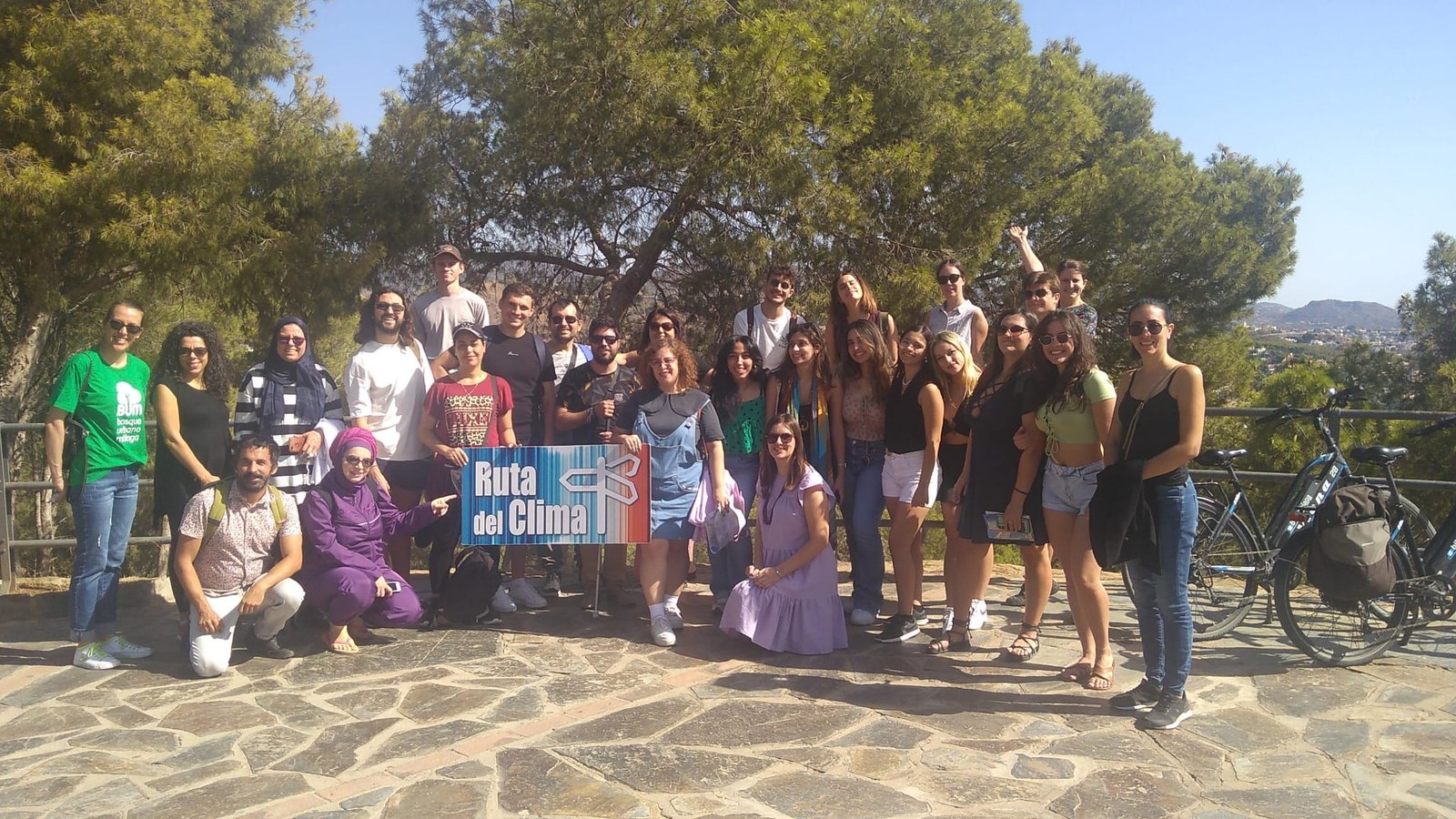
    Those who walk the route not only enjoy the landscape and heritage of Málaga — they also discover, stop by stop, what is happening to our climate, which actors are doing something about it, and how they themselves can contribute. The city becomes the classroom.

    Educational and technological innovation: Clima academy and the mobile App

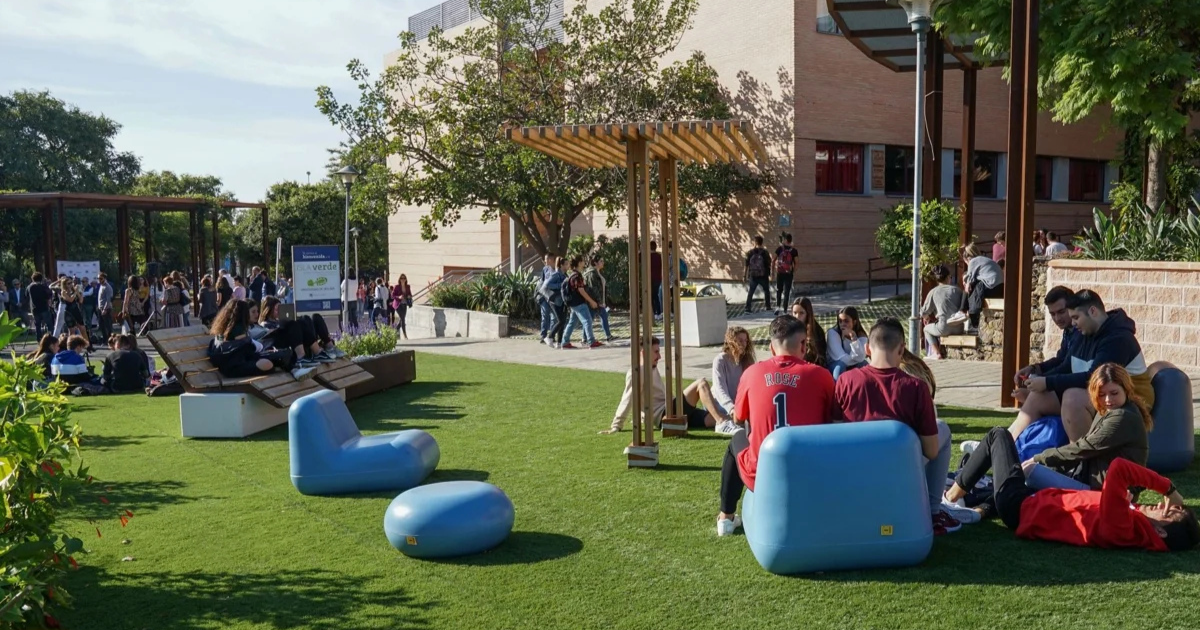
    One of the project’s recent milestones is the launch of educational and technological tools unprecedented in Spain. The University of Málaga recently hosted the presentation of two standout innovations:

    Clima Academy is a gamification experience designed specifically for secondary schools and educational centres, dividing learning about climate change into six interactive stations. Young people and teachers can thus tackle the climate emergency without giving up on play or scientific rigour.

    Additionally, an open application for mobile phones and tablets allows users to geolocate in real time all the sustainable initiatives along the route, both for individual users and professionals. A step forward in making climate knowledge accessible, visual and participatory.

    These tools have been made possible thanks to the collaboration of organisations such as Social Climate, Rutas Pangea, Aethnic, Low Carbon Economy and many others committed to climate action.

    Simultaneous routes, many cities: When climate action expands

    One of the project’s most remarkable moments took place on 21 March, when Climate Routes were held simultaneously in five Spanish cities: Málaga, Madrid, Barcelona, Valencia and Zaragoza. A powerful image: while in some cities people were discussing the impact of DANAs and urban reorganisation, the exact same conversations were taking place in other squares and streets across the country.

    This capacity to generate simultaneous debate across multiple urban nodes is no coincidence, it is part of a communication strategy: making climate change stop feeling like something distant, and instead become a close, shared and mobilising experience.

    What this project teaches us about communication and sustainability

    From the perspective of strategic communication and public relations, the Climate Route is a fascinating case study. We ask ourselves: why does it work?

    First, because it combines physical experience with rigorous content. It is not about handing out a leaflet or listening to a talk — it is about walking, observing, interacting and conversing in the very spaces where the climate is changing.

    Second, because it places citizens at the centre. There is no passive audience receiving information: there are people actively participating, becoming agents of change during and after the route.

    And third, because it bets on hope without denying the crisis. One of the great challenges of climate communication is avoiding emotional collapse or paralysis. The Climate Route achieves this by showcasing real solutions, real people and real possibilities.

    Málaga as a city that regenerates

    This project fits perfectly with the spirit of the EUPRERA Annual Congress 2026, to be held in Málaga in September under the theme “Regenerating public relations and strategic communication in the face of the new global order”. The Climate Route is, in itself, an example of regenerative communication: it does not merely inform or raise awareness — it activates, transforms and connects.

    Málaga is not only the setting for the congress. It is a city that experiments, that innovates and that demonstrates that it is possible to do things differently. The Climate Route is proof of that.

    Saturday, 19 September 

    9:30 – 12:00 (approx). Social Programme

    Faculty of Communication Sciences (UMA)

    The Climate Journey: Explore the climate emergency and its solutions

    The Climate Journey is a participatory experience as a tool for climate action, environmental education, responsible tourism, and cooperation. Through thematic itineraries, participants explore climate change from a local perspective – its causes, impacts, and solutions – in a dynamic and interactive way.

    The activity will be conducted in English, lasts approximately 2–2.5 hours, and requires prior paid registration (during the registration for the Congress, via ConfTool).

    More information about the Routes for Climate project.

  • A century of history by the sea: El Balneario Málaga welcomes EUPRERA 2026

    A century of history by the sea: El Balneario Málaga welcomes EUPRERA 2026

    One of Málaga’s most iconic venues, open since 1918, will host the congress Beach Dinner on the evening of Thursday 17 September. A night where academic exchange meets the Mediterranean.

    More than a venue: A living piece of Málaga’s history

    When EUPRERA 2026 delegates gather for the Beach Dinner on the evening of Thursday 17 September, they will not simply be stepping into a restaurant with a sea view. They will be walking into over a century of history.

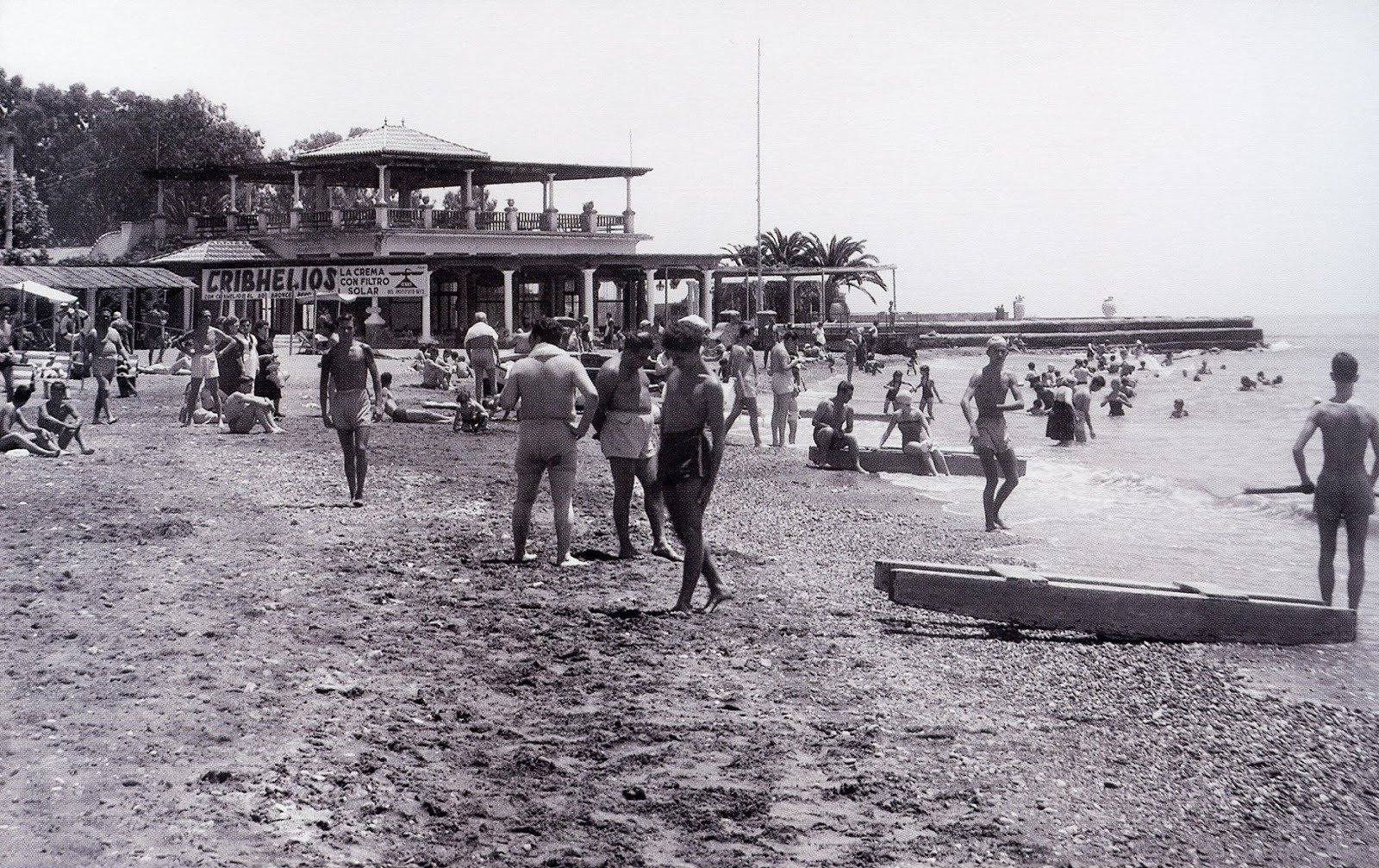
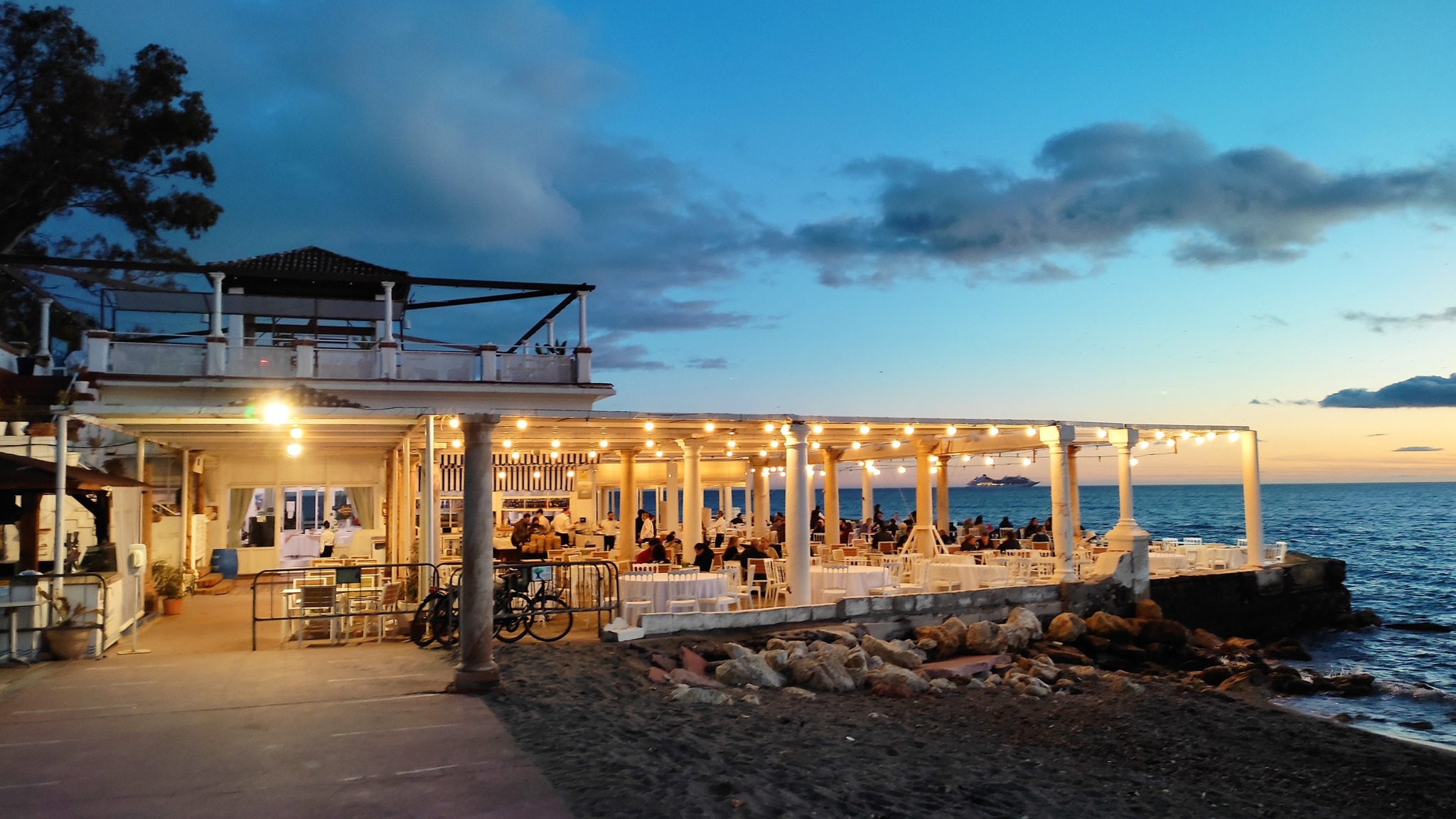
    El Balneario Málaga, officially known as El Balneario de los Baños del Carmen, opened its doors on 16 July 1918, making it one of the oldest and most storied leisure spaces in the city. Located at C/ Bolivia, 26, in the Málaga-Este neighbourhood, the venue sits right on the seafront, looking out across the Mediterranean with a terrace that remains, to this day, one of the finest in the city.

    Born as a pioneer: Open-sea bathing in 1918

    From its very first day, El Balneario was conceived as something different. While other bathing establishments of the era operated in more sheltered or enclosed waters, Baños del Carmen was built directly on the open sea, a bold choice that followed the fashionable bathing culture of cities like Santander and San Sebastián on Spain’s northern coast.

    The concept caught on immediately. Within just a few years, the complex had expanded to include a pier, a restaurant, an outdoor cinema screen visible from the shoreline, and a tennis court that hosted the first tennis tournament ever held in Málaga. In 1922, a dance floor of over 2,000 square metres was inaugurated, a space that became the stage for festivals, regattas, open-air concerts and popular fiestas that drew the whole city to the seafront.

    Among its more curious features, the gardens were home to an aquarium and a fountain that, according to local legend, dispensed wine rather than water.

    A venue that grew with the city

    Throughout the twentieth century, El Balneario evolved alongside Málaga itself. In the 1950s, the grounds hosted equestrian events including the prestigious XI National Show Jumping Competition in 1955. By 1958, a campsite with capacity for 300 visitors had been authorised on the premises, a sign of how the space had become a destination in its own right, not just a local gathering place.

    After decades of decline and neglect, the venue has been working to reclaim its original spirit: a landmark of leisure, culture and open-air life beside the sea. Today, it operates as a restaurant and event space that honours its heritage while looking firmly forward.

    Thursday 17 September: The EUPRERA Beach Dinner

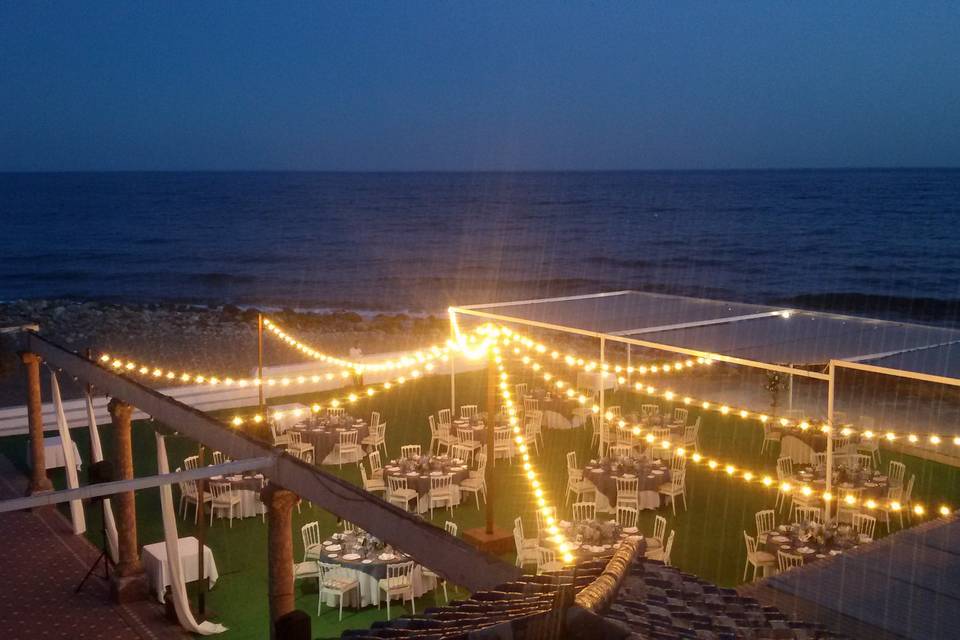
    The congress programme places the Beach Dinner on the evening of Thursday 17 September, from 20:30 to 22:00, at El Balneario’s address on C/ Bolivia, 26. It will be one of the key social moments of the four-day congress, a chance for delegates from across Europe and beyond to step away from the lecture hall, share a meal by the sea and continue the conversations that academic conferences make possible in a more informal setting.

    There is something fitting about the choice of venue. A congress devoted to regenerating public relations and strategic communication, held in a city shaped by its relationship with the Mediterranean, gathering at a space that has itself been through a process of regeneration, from pioneering bathing resort to declining relic to renewed cultural landmark. The parallel is not forced. It is simply there.

    Málaga, the sea and the congress: A sense of place

    For many EUPRERA participants who will be visiting Málaga for the first time, the Beach Dinner at El Balneario will offer something that no conference room can: a direct encounter with the city’s character. Málaga is a Mediterranean city in the most complete sense, it lives facing the sea, it has always drawn its energy from the water, and its social life has historically unfolded in spaces like this one.

    The evening will also serve as a reminder that academic congresses are not only about papers and panels. They are about the people who travel to be in the same room, or in this case, the same terrace, and the connections that form when the formal agenda gives way to an open sky and the sound of the sea.

    Beach Dinner

    El Balneario – Baños del Carmen

    C/ Bolivia, 26, Málaga-Este, 29018 Málaga

    Thursday 17 September, from 20:30 to 22:00

    € 80 (during the registration for the Congress, via ConfTool).

    Extra tickets available for accompanying persons.

    More about the venue’s history

    Full EUPRERA 2026 programme

  • EUPRERA 2026 is coming to Málaga this september

    EUPRERA 2026 is coming to Málaga this september

    The 27th EUPRERA Annual Congress will take place from September 16 to 19, 2026, in Málaga, Spain, hosted by the University of Málaga on the Costa del Sol. This year’s theme:  “Regenerating public relations and strategic communication in the face of the new global order: are we ready for this challenge?”  sets the tone for four days of critical academic debate, research exchange, and professional networking.

    The congress brings together scholars, PhD students, and practitioners from over 50 countries to explore how public relations and strategic communication can respond to a world shaped by polarisation, disinformation, and rapid organisational change.

    The programme runs across four days and combines parallel paper presentation sessions, academic panels, plenary keynotes, and networking spaces. It includes dedicated activities such as the PhD Seminar (starting September 14), the Paper Development Workshop, the Education Café, and the Research Escalator Session for emerging scholars, as well as the EUPRERA Hour and General Assembly. Social activities — including a welcome reception at the UMA Botanical Garden, a beach dinner at El Balneario – Baños del Carmen, and the Saturday Climate Journey experience — complements the programme.

    The full preliminary programme is available at: malaga2026.eu/programme

    Málaga is well connected by air, high-speed rail, and metro. The congress venue is the Faculty of Communication Sciences on the Teatinos campus, directly accessible by metro (lines 1 & 2, stop: Universidad). For those travelling by train, the AVE connects Madrid to Málaga in approximately 2 hours and 30 minutes.

    A selection of recommended hotels is available across different areas of the city — from the station district to the historic centre and the beachfront — with exclusive discount codes for congress attendees. Early booking is strongly recommended.

    Full travel and accommodation details at: malaga2026.eu/information-for-malaga

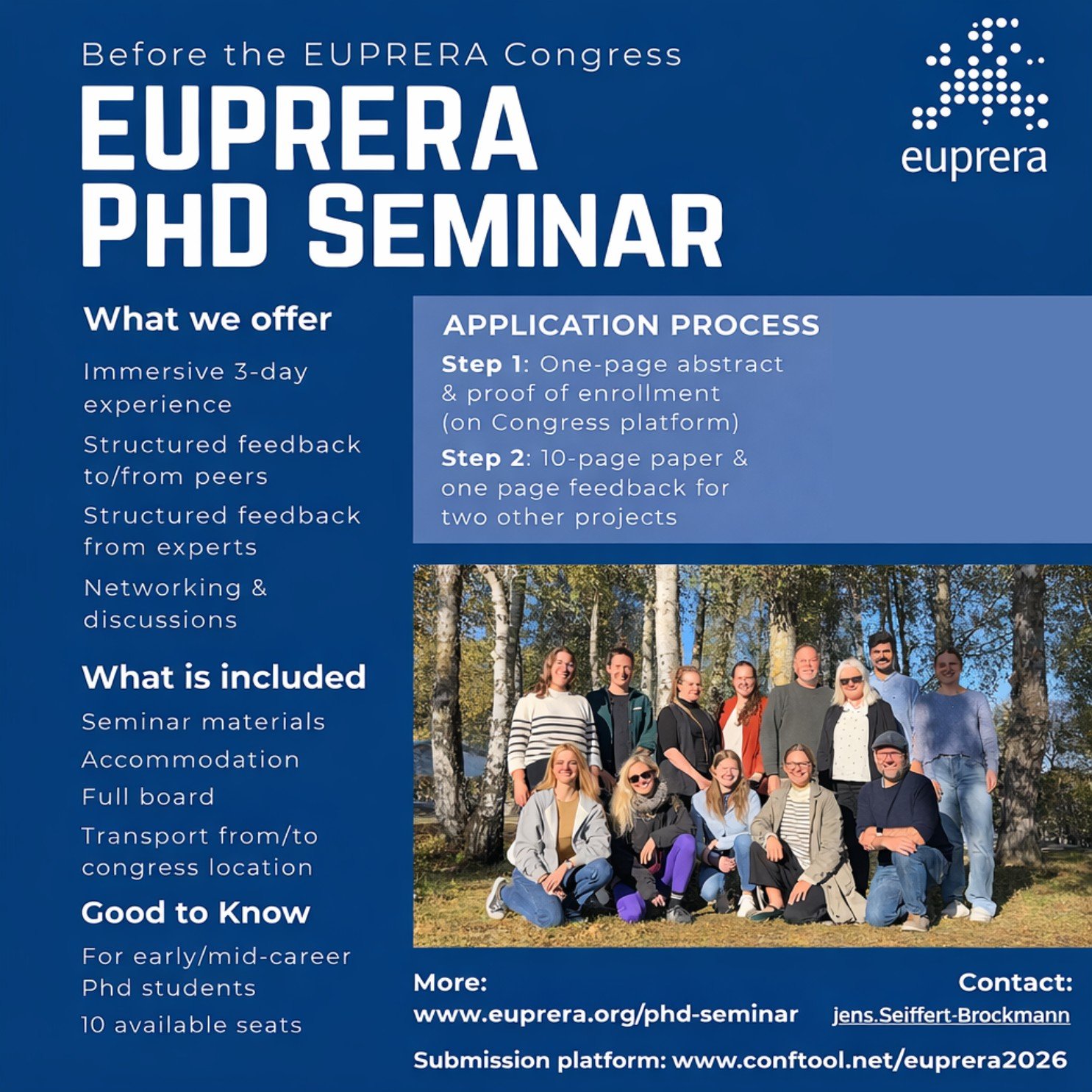
  • Apply Now: XIX EUPRERA PhD Seminar 2026 in Málaga

    Apply Now: XIX EUPRERA PhD Seminar 2026 in Málaga

    The EUPRERA PhD Seminar returns for its nineteenth edition, taking place from 13 to 16 September 2026 in Málaga, Spain — immediately before the EUPRERA Annual Congress. This long-running programme, held successfully since 2007, offers doctoral students in public relations and strategic communication an intensive, international environment to develop their research and professional networks.

    What Is the PhD Seminar?

    The EUPRERA PhD Seminar is a three-day immersive experience designed for early- and mid-stage doctoral students working in public relations, organisational communication, and strategic communication. The format centres on structured feedback — both from peers and from leading experts in the field — as well as networking sessions and in-depth discussions that go beyond what a traditional conference format allows.

    A dedicated panel during the congress that follows the seminar extends the dialogue further. Participants consistently highlight the seminar’s practical value: first-hand advice on publication strategies and academic career development is a distinctive feature of the programme.

    The seminar is limited to 10 participants to ensure a high level of professional exchange. Places are allocated through a competitive selection process.

    What Is Included

    The registration fee covers all seminar materials, full-board accommodation from Sunday afternoon (13 September) through Wednesday morning (16 September), and transport to and from the congress venue. Two registration options are available: the seminar only at €475, or the combined seminar and congress package at €675 — the latter option is recommended and includes the congress registration fee. Accommodation during the congress days is the participant’s own responsibility.

    Venue

    The seminar will be held at the Casa Diocesana de Málaga, a welcoming conference and retreat space set in a quiet environment near the city. Participants are expected to arrive on Sunday, 13 September, in the afternoon.

    How to Apply

    The application process takes place in two steps. In the first step, applicants submit a one-page abstract of their thesis project along with proof of enrolment in a doctoral programme, via the congress platform at conftool.net/euprera2026. This must be submitted before 21 June 2026. Candidates selected in the first round will then be asked to provide a 10-page paper and written feedback on two other participants’ projects.

    Registration fees

    €475 Seminar only: Includes materials, accommodation and full board (Sun afternoon – Wed morning)

    €675 Seminar + Congress Recommended: Includes all of the above plus the congress registration fee

    Key Dates

    21 June 2026Deadline for Step 1 submission (one-page abstract + proof of enrolment)

    13 Sep 2026Arrival in Málaga — seminar begins Sunday afternoon

    13–16 Sep 2026XIX EUPRERA PhD Seminar, Casa Diocesana de Málaga

    16–19 Sep 2026EUPRERA Annual Congress, University of Málaga

    Scientific Direction

    The 2026 seminar is directed by Jens Seiffert-Brockmann (Vienna University of Economics and Business), with the support of Nora Denner (University of Mainz) and Winni Johansen (Aarhus University). For enquiries, contact Jens Seiffert-Brockmann at jens.seiffert-brockmann@wu.ac.at.

  • Apply Now: EUNES Research Escalator at EUPRERA 2026 Annual Congress

    Apply Now: EUNES Research Escalator at EUPRERA 2026 Annual Congress

    EUNES — the European Network of Emerging Scholars — invites early- and mid-career researchers to join the Research Escalator Session (RES) at the EUPRERA 27th Annual Congress, to be held at the University of Málaga, Spain, from 16 to 19 September 2026.

    The EUNES Research Escalator is a dedicated session designed to support scholars at pivotal stages of their academic journey. Whether you are developing a work-in-progress project, advancing a PhD, or exploring a new research idea, the Research Escalator offers a structured and collegial environment in which to present your work and receive meaningful, constructive feedback from both senior respondents and peers.

    The session will take place on Friday afternoon, 18 September 2026, as part of the congress programme. Over the years, the RES format has earned consistent recognition from participants for its collaborative spirit and its practical value in helping researchers move their work toward publication.

    Why Participate?

    The Research Escalator is built around three core benefits for participating scholars. First, it provides direct, actionable guidance: pitching your work-in-progress to an audience of respondents and peers generates the kind of critical yet supportive input that can meaningfully accelerate a research project. Second, it is an exceptional networking opportunity, connecting you with fellow scholars who share your interests in public relations and strategic communication, and opening the door to lasting academic collaborations. Third, it fosters a culture of mutual learning — the exchange of ideas across different methodological traditions and career stages consistently generates new perspectives that participants carry forward into their own work.

    The EUNES Research Escalator welcomes empirical, theoretical, and methodological contributions. Researchers from all career stages, affiliations, and geographic locations are encouraged to apply. In cases of high demand, preference will be given to early- and mid-career researchers.

    How to Apply

    Interested scholars should submit an extended abstract of 500 to 1,000 words (excluding references) through the official congress submission platform at conftool.net/euprera2026. Abstracts may address any topic within public relations and strategic communication, regardless of methodological approach.

    Key Dates

    21 June 2026Deadline for extended abstract submission via ConfTool

    6 July 2026Decision on submission communicated to authors

    10 August 2026Assignment of extended abstracts for in-depth review

    18 September 2026Research Escalator Session — Friday afternoon, Málaga

    About EUNES and EUPRERA

    EUNES — the European Network of Emerging Scholars — is a network within EUPRERA (European Public Relations Education and Research Association) dedicated to fostering the development of early- and mid-career academics in public relations and strategic communication. Through initiatives such as the Research Escalator, EUNES works to build an inclusive and supportive scholarly community across Europe and beyond. https://euprera.org/eunes

    El Congreso Anual de EUPRERA es uno de los principales encuentros académicos en el ámbito de las relaciones públicas y la gestión de la comunicación en Europa. La 27ª edición reunirá a académicos y profesionales de todo el mundo en la Universidad de Málaga del 16 al 19 de septiembre de 2026.

  • #EUPRERAtalks – Regeneration and Communication: Rethinking the Role of Public Relations in a Changing World

    #EUPRERAtalks – Regeneration and Communication: Rethinking the Role of Public Relations in a Changing World

    Regeneration and Communication: Rethinking the Role of Public Relations in a Changing World

    What to Expect from the Webinar

    We are just under two months away from the submission deadline (15 March) for the EUPRERA 2026 Congress, which will take place in Málaga, Spain. With a timely and challenging theme—Regenerating Public Relations and Strategic Communication in the Face of the New Global Order: Are We Ready for This Challenge?—the organizing team invites you to a webinar designed to offer insights and reflections to support a potential submission to the Congress.

    Regeneration is emerging today as a paradigm that goes beyond the traditional boundaries of sustainability and resilience, offering a deeper, more evolutionary, and relational perspective on social, economic, and environmental systems. It is not only about maintaining what already exists, but about activating processes of restoration, revitalization, and evolution that enable living systems—including organizations—to become agents of collective well-being.

    In a global context marked by the climate crisis, persistent inequalities, and political-communicative tensions, this approach opens a necessary discussion about how institutions function and what kind of communication is required to align with the principles of interdependence, adaptation, and mutual care.

    In this context, public relations and strategic communication hold great potential to foster regenerative processes, although historically they have also contributed to reinforcing power narratives, promoting discourses with limited impact, or sustaining exclusionary dynamics. Recognizing this ambivalence is essential to reorient the discipline toward more conscious, critical, and transformative practices.

    This webinar proposes to explore how communication can become a force capable of overcoming inertia, expanding our understanding of systemic problems, and fostering relationships that generate real positive impact.

    The following key questions will guide the dialogue:

    • How can we design narratives that support regenerative change?
    • In what ways can communication ethically influence organizational decision-making?
    • What professional responsibilities emerge in a context affected by misinformation, polarization, and the loss of public trust?

    This space invites participants to reflect and to build new possibilities for the regenerative role of communication.

    Oradores

    Evandro Oliveira, CEO and Founder of Gaudere, Spain

    Consultant, executive coach, and professor with global activity, working at the intersection of strategy, communication, and regenerative management. Founder of Gaudere in Barcelona, he collaborates with organizations worldwide. He combines applied research, leadership coaching, and executive education, focusing on sustainability, organizational transformation, and responsible communication across diverse cultural and institutional contexts.

    Bel Barroso, University of Málaga, Spain

    Social entrepreneur, researcher, and visiting professor specializing in strategic communication for sustainability. She co-founded Cronopios and has led projects on education, climate activism, and biomimicry. Former Director of Innovation and Communication at AlmaNatura, she collaborates with Comunidad B Andalucía and B Academics Spain, delivering international lectures on transformative communication.

    Rune Schanke Eikum, BI Norwegian Business School, Norway

    Managing Director of the innovation consultancy Tinkr (Norway) and a late-stage PhD candidate at BI Norwegian Business School. His work focuses on companies’ transitions toward sustainability and their path to business regeneration, combining academic research with hands-on work with Norwegian organizations in land-based aquaculture and coffee production, and drawing on his early experience as a consultant at GK Nordic, the largest public relations and communication agency in the Nordic region.

    Moderator – Isabel Ruiz-Mora, University of Málaga, Spain

    Lecturer and researcher in public relations, sustainability, and activism at the University of Málaga. Editor of the International Journal of Public Relations. Member of ECREA, EUPRERA, and AIRP. I believe in a better world; we must uphold education as a human right! I love discovering new places, new flavors, new people…

  • EUPRERA 2026 Congress Officially Presented at Lund University (Sweden)

    EUPRERA 2026 Congress Officially Presented at Lund University (Sweden)

    EUPRERA 2026 Congress Officially Presented at Universidad de Lund (Suecia)

    The EUPRERA Annual Congress 2026 was officially presented during the closing session of the 26th EUPRERA Congress, held at Lund University (Sweden) in September 2025.

    Representing the organising committee, Isabel Ruiz-Mora, together with María Belén Barroso, introduced the upcoming edition, which will take place from 16 to 19 September 2026 at the University of Málaga (Spain). The announcement marks the beginning of a new stage for the EUPRERA community, which will once again gather to exchange ideas, share research and reflect on the challenges shaping the future of public relations and strategic communication.

    A congress with a regenerative vision

    The 27th Annual Congress of the European Public Relations Education and Research Association (EUPRERA) will be held under the theme:

    “Regenerating public relations and strategic communication in the face of the new global order: are we ready for this challenge?”

    This edition calls for a critical and transdisciplinary dialogue on how public relations and strategic communication can move beyond sustainability to actively contribute to social, organisational and environmental regeneration. The congress seeks to examine the transformative potential of the discipline, as well as its ethical and social responsibilities, in a world marked by the climate crisis, disinformation, inequality and digital transformation.

    Hosted by the University of Málaga

    The congress will be hosted by the Faculty of Communication Sciences at the University of Málaga, one of Spain’s leading institutions in communication and media studies. With a strong record of research and international collaboration, the Faculty will provide an inspiring Mediterranean setting for academic exchange, collaboration and innovation in the communication field.

    The programme will include plenary sessions, parallel panels and workshops, organised around six main thematic tracks:

    1. Organisational legitimacy in the face of the new global order
    2. Regenerative narratives
    3. Ethics and conscious leadership
    4. Measuring and evaluating PR & strategic communication contribution
    5. Education and training in PR and strategic communication
    6. Open Track

    Call for papers and participation

    The Call for Papers will open in the coming weeks, inviting academics, PhD students and professionals to submit research contributions, case studies and panel proposals aligned with the theme and main tracks. Detailed guidelines and registration information will be available on the official website.

    About EUPRERA

    The European Public Relations Education and Research Association (EUPRERA) is an autonomous organisation with more than 550 members across 50 countries. Its mission is to advance academic research and knowledge in public relations and strategic communication through collaborative projects, publications and its annual congress — a key meeting point for the international communication research community.

    ________

    Venue: Faculty of Communication Sciences, University of Málaga
    More information: www.malaga2026.eu
    Contact: congress2026@euprera.org